
When I first learned about all the VA presumptive conditions linked to Agent Orange Exposure it was hard to wrap my head around what it all meant for me as the caregiver and my husband the patient.
Without realizing it I had evolved to the state of mind of taking one day at a time. I chose not to forecast the future. It wasn’t heroic it was just using coping skills I had learned from living for eight decades. You can’t have lived this long and not had to deal with crises in one form or another. A new day always follows a bad one.
My reason for tackling this subject is, if I can just help one person cope a little better about what is before them, I will have done my job.
According to the Disabled Veteran’s Empowerment network the diseases now on the VA’s Agent Orange list are ischemic heart disease, lung and trachea cancers, prostate cancer, multiple myeloma, Hodgkin’s disease, non-Hodgkin’s lymphoma, Parkinson’s Disease, type 2 diabetes, peripheral neuropathy, AL amyloidosis, chronic B-cell leukemia, chloracne, early-onset peripheral neuropathy, porphyria cutanea tarda, and soft tissue sarcomas. And, under consideration to be added to the list are bladder cancer, hypothyroidism, hypertension and Parkinson’s-like symptoms.
In my husband’s case he is experiencing Parkinson’s Disease, peripheral neuropathy and hypertension.
My impulse is to tell you all the details about how we got here but it won’t help you. What might help is to tell you what it feels like from both sides of this debilitating illness. Understanding it seems to produce greater patience and better understanding for both the caregiver and the pateint. Or at least this is what we have found.
My husband has always been the consummate social and humorous person that everyone loves. He has a very easy and accepting manner and as my spouse of soon to be 55 years, he made very few if any demands and never exhibited any control issues. In a nutshell, he encouraged me to be as successful I could be. This meant building several businesses, traveling and lecturing extensively across the US. speaking internationally in the medical field and authoring two books. I share all of this to give you a glimpse into the personality of both of us, because without an encouraging and supportive partner, I could never have accomplished any of these things. Meanwhile, he owned and ran a travel agency and was the stay-at-home parent for our twin daughters. The calm and steady rock for all of us. Both sides of this coin being different but equal in importance and contribution.
Spring forward to today and our new diagnosis of Parkinson’s.
The first visible signs of Parkinson's are usually subtle, and we mistook them for normal aging until getting a formal diagnosis just a few weeks ago. We saw two neurologists and received the Parkinson’s diagnosis from both. Our General Practitioner ( aka Gate keeper physician) ruled Parkinson’s out, and we had to fight to get a referral to a neurologist. We prevailed and thank goodness we did.
Following are all of things that started to occur over a two-year period prior to the formal diagnosis. Some of these happened so gradually that we didn’t realize what was happening.
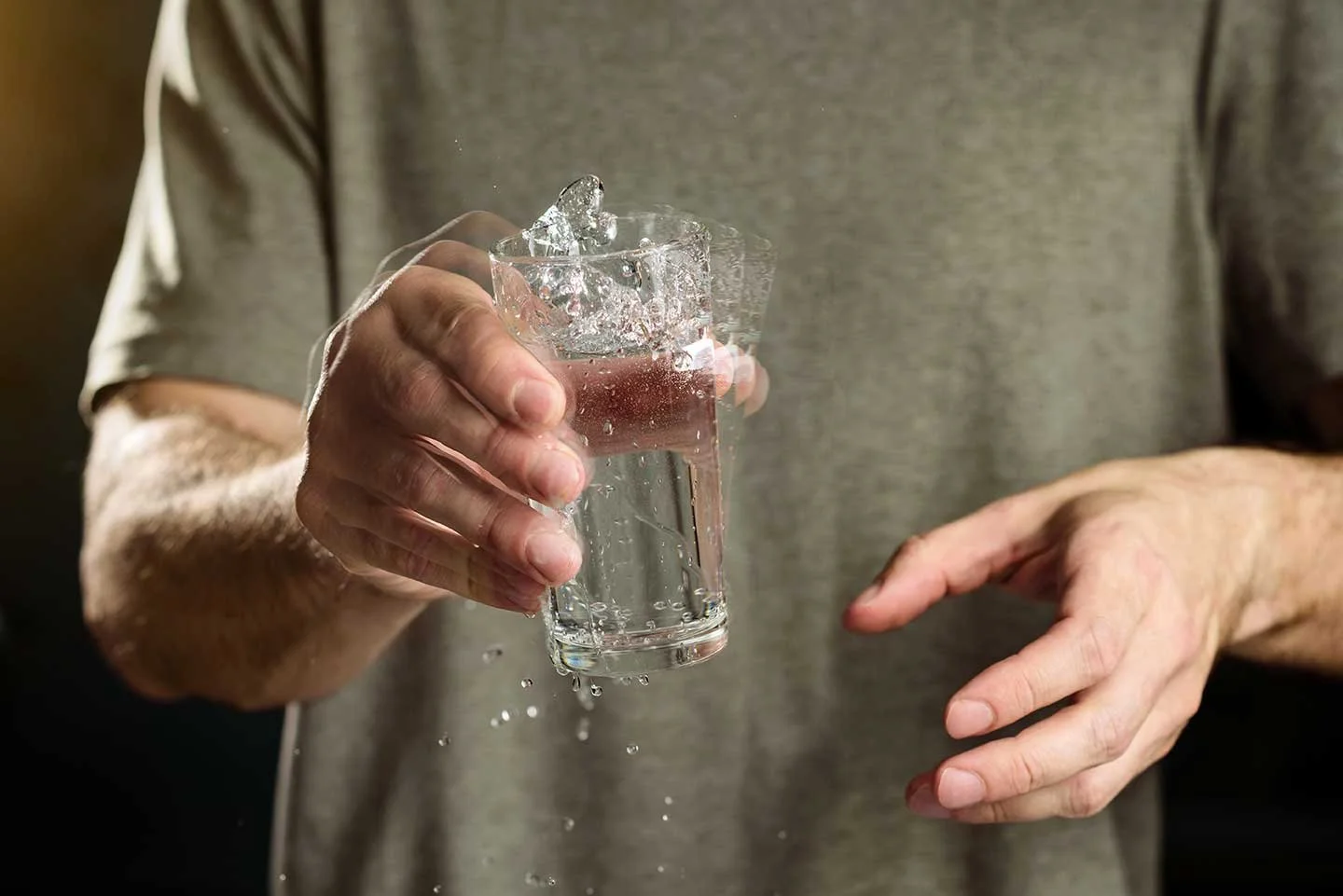
Tremor — This started on the right side of the body, in a hand and fingers. We learned this is called a resting tremor. This was the most obvious, but when mentioned in medical exams it was brushed over as common for Bill’s age.
Slowness of movement — Everyday tasks take longer: buttoning a shirt, getting up from a chair, walking. Movements become smaller and slower overall. This came on so slowly it’s a little like the example of the frog going from warm water to boiling and not jumping out.
Rigidity — Stiffness in the limbs or trunk. We were of the mind, what 80-year-olds aren’t stiff?
Reduced arm swing while walking —This was so subtle and when you are walking along side of someone you are not as aware they are not moving their arms. Or, in my case I didn’t notice what was right in front of me. My advice to anyone reading this, “notice what you notice” because the signs are there regardless of what illness you might be dealing with.
Micrographia — Handwriting becomes smaller and more cramped over time. This might be the one symptom Bill didn’t appear to have.
The next three symptoms were very evident, but we had no idea these were Parkinson’s related.
Masked face (hypomimia) — Reduced facial expression, giving the appearance of a blank or serious look even when the person doesn't feel that way. This became very evident, but we didn’t know what to relate this to other than getter older.
I remember asking Bill, why are your eyes opening so wide, and he wasn’t aware he was doing this. And then the opposite, his facial expressions became somewhat frozen with a blank stare.
Shuffling gait / stooped posture — Shorter steps, a slightly hunched stance, and less fluid movement when starting to walk.
We attributed this to his knee surgery and figured it would get better, which of course, it couldn’t get better. It was going to get worse.
Soft or monotone voice (hypophonia) — Speech may become quieter, less varied in pitch, or slightly slurred.
I found myself constantly asking for Bill to repeat himself and began to think I was losing my hearing, but every time I had my hearing checked I was told it was fine.
Non-motor signs (often appear years before motor symptoms, but are easy to miss)
Loss of sense of smell (anosmia/hyposmia) — One of the earliest and most consistent pre-motor signs, sometimes appearing 5–10 years before diagnosis.
REM sleep behavior disorder — Acting out dreams physically (kicking, punching, shouting) during sleep.
Constipation — Chronic, unexplained constipation is a well-documented early marker.
Mood changes — New-onset depression or anxiety, sometimes preceding motor symptoms by years.
Sleep disturbances — Trouble staying asleep, restless sleep.
Here are a few things to keep in mind
Symptoms typically start asymmetrically (one side of the body), which is a helpful diagnostic clue distinguishing Parkinson's from some other movement disorders
No single symptom confirms you have Parkinson's, you need a clinical diagnosis, one based on a pattern of these signs together, and often these are supported by a response to dopaminergic medication.
What I wish we had known earlier: By the time motor symptoms are visible, it's estimated a significant portion of dopamine-producing neurons have already been lost, which is why the non-motor "prodromal" signs are getting more research attention as potential early signs.
The outside looking in, the telltale signs of Parkinson’s
As a life partner I often look at my husband in social gatherings while he is talking, while we watch TV or while he is driving, something he can still do and loves, but I see him declining, aging before my eyes. It is painful for seniors to witness this happening to each other, but especially when the aging process is accelerated by a disease. It’s less gradual and it can happen overnight as it did for us, and I feel a deep sadness for both of us. This once vital, strong, 6’3” man, with clear blue eyes and a handsome face in every decade of his life, is now struggling with all these ailments. That sense of loss is difficult to put into words. Of course, I too am aging more rapidly I just have the blessing of good health so far. I sometimes feel like ignoring my internal conversation, hoping if I just ignore it, we’ll somehow return to our past life.
What I think it looks like for Bill looking out, is the frustration of not being able to do the simple things we both took for granted. He loved to tinker in the garage, and for years shared his love for motors and engines with our son-in-law and many other young friends. Then there are the basic things around the house that couples share and don’t even think about, taking out the garbage, fixing the circuit breaker, emergency plumbing, you name it, Bill could always fix it. Now, I’m the fix it person and you can only imagine how hard it is for Bill to explain the difference between a Flat head versus a Phillip’s screwdriver over and over, not to mention; “righty tightly and lefty loosie”. Thank God we can still laugh about some of these things.
I now see him struggle to form words, and it has become difficult to speak clearly, as his voice has continually grown weaker, all part of Agent Orange exposure. Bill is also a master storyteller, and one of the many things that people love so much about him are his humorous accounts of life and something many friends refer to as “Bill-isums”. He can still do this but with much more difficulty than previously, all exasperating for something so second nature to him.
Feeling powerless is a new phenomenon for Bill which puts him into a new role that neither of us are comfortable with just yet. We’ll get there.
To draw us to a conclusion, I encourage you to keep in touch with your old friends, make new ones, and stay connected to family members you like and enjoy, but anyone who falls outside of this description you can place on the back burner. There’s no criticism or shame in this, it’s just self-preservation to stay positive and upbeat.
Don’t hide from what is happening in your life, put it out there so people can better understand, it’s not about sympathy it’s about connection and still enjoying every day that you can. Staying vital is something you can claim regardless your circumstances because it requires you to focus on others instead of your own situation. As we all know everyone has “stuff” happening in their lives and not everything is going to be positive, but our outlook can be.
Lastly, learn as much as you can about Parkinson’s or whatever illness you are dealing with, and be informed about services and the care options that are available for you. The VA has some wonderful support systems that if you are a veteran you have paid for and you are entitled to, and so is your spouse. We also found researching your own health care can be very liberating and provide a certain amount of control. We learned just because we are old doesn’t mean we are helpless and we still have a voice about what is happening to us, both the patient and the caregiver.